October 7, 2026
Top-Dressing Hay and Pasture Ground by Drone in Central Alberta
Forage acres get fertilized last, and often not at all, because the cash crop comes first and the hay quarter is the one the floater cannot travel. A drone changes the access problem, and on a stand you intend to cut, it also means no wheel tracks.
What It Is
Top-dressing a perennial forage stand means broadcasting granular fertilizer onto established hay or pasture that is already growing, rather than placing it with a drill at seeding. There is no seeding pass to hide the fertilizer in, so surface broadcast is the only option on a stand that is years into its life.
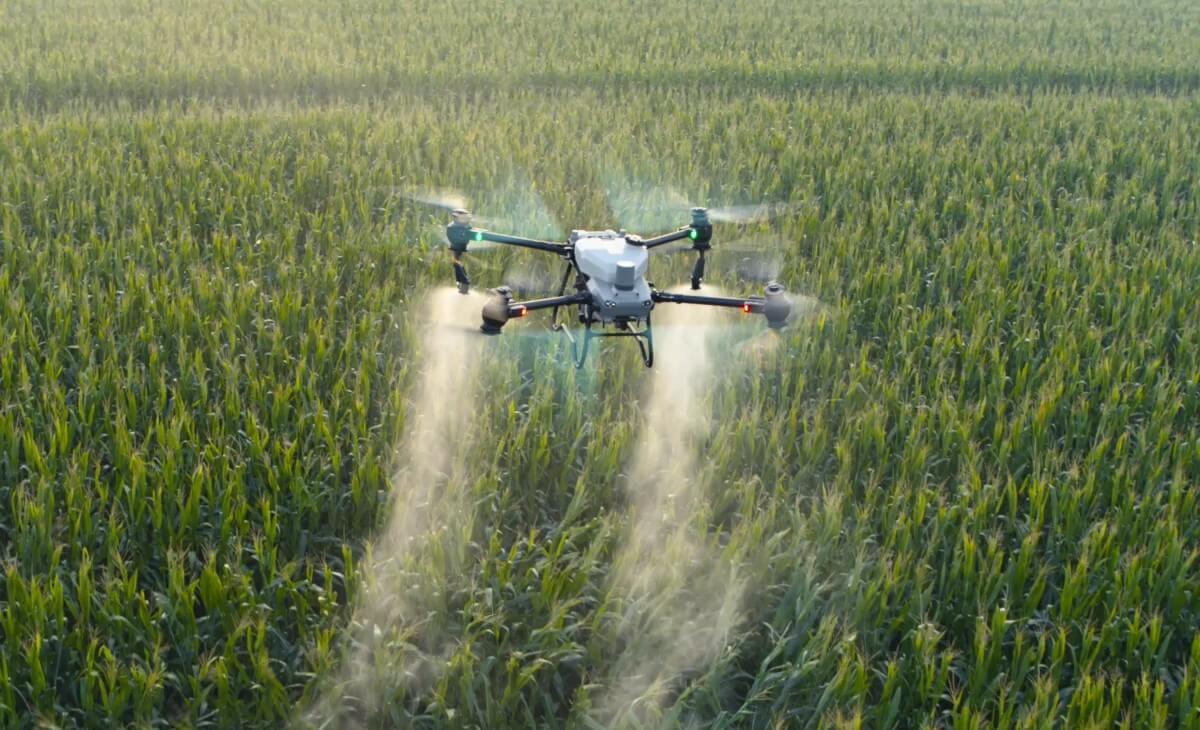
Doing it with a drone means the product goes on from above, with no machine on the ground. On a field you plan to cut, that distinction is the whole point.
Forage ground is the quietly neglected part of a lot of Alberta operations, and it is usually neglected for two honest reasons. The cash crop gets the fertilizer budget first, and the hay quarter is frequently the awkward one — the piece that was never broken because it was stony, sloped, treed, or wet, which is exactly why it ended up in forage in the first place.
A drone does not fix the budget question. It does remove the access question, which is the one that turns "we should fertilize that stand" into "we never get to it."
Who It's For
Operations with perennial forage acres that are producing below what the ground could give.
That covers hay growers running alfalfa, alfalfa-grass, brome, or timothy stands for their own feed or for sale; cow-calf operations with tame pasture on rotation; mixed farms where the forage quarters sit behind the grain in every priority list; and anyone with a stand that is thinning or shifting toward grass and weeds and who suspects nutrition is part of why.
It applies most strongly where the ground itself is the obstacle. Not a field that is wet this week, but a field that is permanently difficult: stony, side-hilled, broken by bush and seeps, fenced into small paddocks, or served by one gate and a trail.
It is less relevant if your hay is on big, flat, drivable quarters with easy approaches. On that ground a ground spreader is normally the cheaper pass, and we will say so.
Also worth reading if you are already convinced of drone top-dressing in general. The wet-ground and tall-crop article covers the annual-crop version of this decision, where the obstacle is temporary. Forage is a different problem, because the obstacle does not go away and the stand lives for years.
How It Works
First, decide what the top-dress is actually for, because grass and alfalfa want different things.
This is the single most common place a forage fertilizer plan goes wrong, and it is not subtle. The nutrient logic flips depending on what is in the stand:
- Grass-dominant stands — brome, timothy, fescue, or a grass-heavy mix — respond to nitrogen. Grass has no way to fix its own, so nitrogen is usually the limiting nutrient and the one that moves tonnage.
- Alfalfa and alfalfa-dominant stands fix their own nitrogen through root nodules. Applying nitrogen to a healthy alfalfa stand is mostly a way to feed the grass and weeds competing with it. What alfalfa responds to is phosphate, potassium, and sulphur.
- Mixed alfalfa-grass stands are a judgement call, and the judgement is about which species you want to favour. Nitrogen pushes the stand toward grass. Phosphate, potassium, and sulphur support the legume. The decision is a management decision before it is an agronomic one.
Second, understand why forage ground runs down faster than a grain field does. On a cereal crop, the grain leaves and most of the residue stays. On a hay field, you cut the entire plant and haul it off the field, year after year, and the nutrients in that plant go with it. Pasture is gentler, because grazing cattle return much of what they eat, but it concentrates it where they stand — around water, shade, and gates — rather than spreading it evenly.
That is the mechanism behind stands that quietly decline. It also means the only way to know what your stand needs is to test it, not to guess from how it looks. A soil test on forage ground is worth more than on annual ground, because nobody has been correcting it every spring with a drill.
Third, work out the timing, which on forage means working around cuts and cattle.
- Spring green-up is the main window for nitrogen on a grass stand. It goes on as growth starts so the nutrient is available while the plant is building first-cut yield.
- Immediately after a cut is the window for pushing regrowth, where moisture supports a second or third cut. The practical advantage here is enormous: the stand is short, the field is accessible, and the next cut is far enough out that the application has time to work.
- After the last cut, going into fall is the usual window for phosphate, potassium, and sulphur. These are less prone to moving or being lost than nitrogen, so placing them when there is time and the field is clear makes sense.
- Pasture is governed by the rotation rather than the calendar. The paddock has to be empty, and it has to stay empty long enough for the product to dissolve into the soil rather than sit on the surface where stock can reach it. That is a grazing-plan conversation.
Granular needs moisture to do anything. A prill lying dry on a sod surface is not yet fertilizer. It has to dissolve and move into the root zone, which means an application timed ahead of expected moisture is worth more than one timed for convenience. Dense sod makes this more important than on bare soil, because there is thatch for product to lodge in.
Fourth, here is why a drone specifically.
- No wheel tracks in a standing stand. This is the reason that matters most and it is the one that separates forage from annual crops. A rut in a hay field is not a one-season problem. It is a hazard the haybine has to deal with for the remaining life of the stand, it damages crowns along the track, and it opens ground for weeds. There is no wheel track from an aircraft.
- Ground that is permanently untravellable. Stones, side hills, seeps that never dry, bush margins, and old creek crossings do not improve between seasons. A drone is unaffected by all of it.
- Fences and paddocks. Flying over a fence line costs nothing. Driving a spreader through a rotational grazing system means gates, and small paddocks mean a lot of gates and a lot of turning on headlands that are already compacted.
- Small and odd pieces. The six-acre corner, the long narrow strip along a slough, and the back quarter behind a trail are all poor fits for a floater and normal work for a drone.
- An as-applied record. Every pass comes back as an as-applied map showing where product actually landed, which on forage ground is often the first real record anyone has of that field being fertilized.
Fifth, the honest limits, because this is not the answer everywhere.
The main one is rate. Drone spreading cost is driven by payload-to-acre — how many hopper loads a target rate requires per acre, which sets flying time and refill cycles. Forage top-dress rates are not always light, and a high-rate blend on a large field is where a ground spreader pulls ahead on cost. Our published figures are a typical Alberta custom application rate of $10 to $15 per acre and a drone operating cost of about $4.50 per acre, and the cost article and the floater comparison work through where the lines cross.
The others are practical. Product has to be staged where the aircraft can reach it, which on a remote pasture takes planning. Overhead powerlines and tall shelterbelts need to be known in advance. Livestock has to be moved out of the field being worked. And a dense sod surface still has to be pan-tested for the specific product, because effective swath is a property of the product and the setup, not of the brochure — see the pan test entry.
On spraying forage ground, briefly. Granular fertilizer and seed spreading is the everyday legal drone service in Canada and it is what the above describes. For herbicide on pasture — the broadleaf and brush control question that comes up on every grazing conversation — Health Canada's PMRA issued an interim Letter of No Objection in June 2026 that opens a narrow pathway: a product already registered for conventional aerial application can be applied by drone under those same label directions, where the registrant has not opted out, with Transport Canada and provincial applicator licensing still applying. It is label-bound and interim rather than blanket approval, and products without aerial label directions are not covered. The current status article has the detail.
What the pass itself looks like. A boundary for the field or paddock, a rate — flat is perfectly correct on a uniform stand, and variable only if there is zone data worth following — product staged at an access point, livestock moved, and the aircraft flying the stand including the pieces no machine has reached in years. The record comes back afterward.
Key Dates
- Grass stands:Nitrogen at spring green-up
- Alfalfa stands:Phosphate, potassium, sulphur — not nitrogen
- Regrowth push:Immediately after a cut, while the stand is short
- P, K and S:After the last cut, going into fall
- Pasture:Paddock empty, timed to the grazing rotation
- Before anything:Soil test the stand — forage ground is rarely corrected
- Published cost figures:$10-15/ac typical AB custom rate; ~$4.50/ac drone operating cost
How UAV AG Can Help
What UAV AG does on a forage top-dress booking:
- →We fly the pieces a floater cannot reach — stony, sloped, treed, and seepy ground — not just the easy middle of the field.
- →No wheel tracks and no crown damage in a stand you intend to cut for several more years.
- →Paddock-by-paddock application that works with a grazing rotation instead of against the gates.
- →A pan test for your specific product and rate so the effective swath is real rather than assumed, on a sod surface.
- →Honest advice on the grass-versus-alfalfa nutrient question before anything is ordered, including when the answer is to test first.
- →A georeferenced as-applied record after the pass, which on forage ground is usually the first one that field has ever had.
- →A straight answer when a ground spreader is the cheaper pass for your acres, with the cost figures we actually publish.
A Note From Us
Forage acres are where we see the biggest gap between what ground could produce and what it does produce, and it is almost never because the grower does not know the stand needs feeding.
It is because the hay quarter is the one with the stones, or the side hill, or the one gate at the end of a trail, and because the fertilizer order gets written for the grain first and the forage gets whatever is left. Year after year that compounds. A stand thins, grass and weeds take over from the legume, and eventually the field gets blamed and reseeded when a nutrition problem was most of what was wrong.
The part growers tell us they had not weighed is the wheel track. On an annual crop a rut is an irritation for one season. On a stand you are going to cut six more times, it is a hazard the haybine meets every pass and a strip of damaged crowns that stays damaged. That cost never shows up on a per-acre quote, which is exactly why it gets left out of the comparison.
We will not tell you a drone is the cheapest way to put fertilizer on a big flat drivable hay field, because it usually is not. We will tell you it is often the only practical way to put fertilizer on the forage ground that actually needs it. Start with a soil test and a conversation about what is in the stand. The machine question comes after that.
Frequently asked questions
Should I put nitrogen on an alfalfa stand?
Generally no. Alfalfa fixes its own nitrogen through root nodules, so applied nitrogen on a healthy alfalfa stand mostly feeds the grasses and weeds competing with it. What alfalfa responds to is phosphate, potassium, and sulphur. The exception worth thinking about is a mixed stand you deliberately want to shift toward grass, since nitrogen will do exactly that.
Why does hay ground run down faster than a grain field?
Because you remove the whole plant. On a cereal crop the grain leaves and most of the residue stays on the field, but a hay cut takes the entire plant off and the nutrients in it go with the bale, cut after cut and year after year. Pasture is gentler since grazing cattle return much of what they eat, but it concentrates it around water, shade, and gates rather than spreading it evenly across the paddock.
When is the best time to top-dress a hay field?
It depends which nutrient. Nitrogen on a grass stand goes on at spring green-up so it is available while first-cut yield is being built, or immediately after a cut to push regrowth where moisture allows. Phosphate, potassium, and sulphur usually go on after the last cut heading into fall, because they are less prone to loss and the field is clear. The post-cut window is the easiest to work with, since the stand is short and the next cut is still weeks away.
Why would I use a drone instead of a ground spreader on hay?
Chiefly to avoid wheel tracks in a stand you intend to keep cutting. A rut in a hay field is not a one-season problem — it is a hazard the haybine meets on every pass for the remaining life of the stand, with damaged crowns along the track and open ground for weeds. Beyond that, forage ground is often permanently difficult rather than temporarily wet: stones, side hills, seeps, bush margins, and small fenced paddocks do not improve between seasons.
Is a drone cheaper than a ground spreader on forage?
Not always, and on big flat drivable hay quarters usually not. Drone cost is driven by payload-to-acre, meaning the number of hopper loads your target rate requires per acre, so a high-rate blend on large easy acres is where ground equipment pulls ahead. The figures we publish are a typical Alberta custom application rate of ten to fifteen dollars per acre and a drone operating cost of about four dollars fifty per acre. The drone wins on access and on not rutting a stand, not automatically on price.
How do I fertilize pasture that has cattle on it?
You work to the rotation rather than the calendar. The paddock has to be empty when the pass is flown, and it needs to stay empty long enough for the granular product to dissolve and move into the soil rather than sitting on the surface where stock can reach it. Flying paddock by paddock suits this better than a spreader does, because an aircraft crosses a fence line without needing a gate opened.
Does granular fertilizer work on sod, or does it just sit there?
It works, but only once it dissolves and moves into the root zone, so moisture is doing the real work. A dense sod surface with thatch holds prills up more than bare soil does, which makes timing ahead of expected rain more valuable on forage than on worked ground. Product broadcast onto a dry sod in a dry stretch is waiting rather than working.
Can a drone reach pasture that has no road access?
That is one of the stronger cases for it, with one planning requirement: product still has to be staged somewhere the aircraft can reload from. The fertilizer gets trucked to an accessible point rather than across the field, and the aircraft covers the ground from there. On a remote quarter the staging plan is the part worth sorting out early, not the flying.
Can you spray weeds on my pasture with a drone?
There is a narrow pathway for it now rather than a blanket yes. Health Canada’s PMRA issued an interim Letter of No Objection in June 2026 permitting drone application of pesticides already registered for conventional aerial application, under those same label directions, where the registrant has not opted out — with Transport Canada and provincial applicator licensing still applying. Products without aerial label directions are not covered. Granular fertilizer and seed spreading remains the everyday service, and we would check the specific product before committing to anything.
Will a top-dress fix a thinning stand?
Sometimes, and it is worth establishing before you reseed. A stand that is thinning and shifting toward grass and weeds is often short of the nutrients the legume needs, and that is a cheaper problem to correct than a full reseed. But nutrition is not the only cause — age, winterkill, drainage, cutting height, and harvest timing all contribute. A soil test tells you whether nutrition is part of it, which is the question to answer first.