June 25, 2026
What Drone Fertilizer Spreading Actually Costs Per Acre in Alberta
A plain-numbers look at granular spreading by drone — what drives the per-acre cost, and how it stacks up against a floater on the kind of ground where it pays.
What It Is
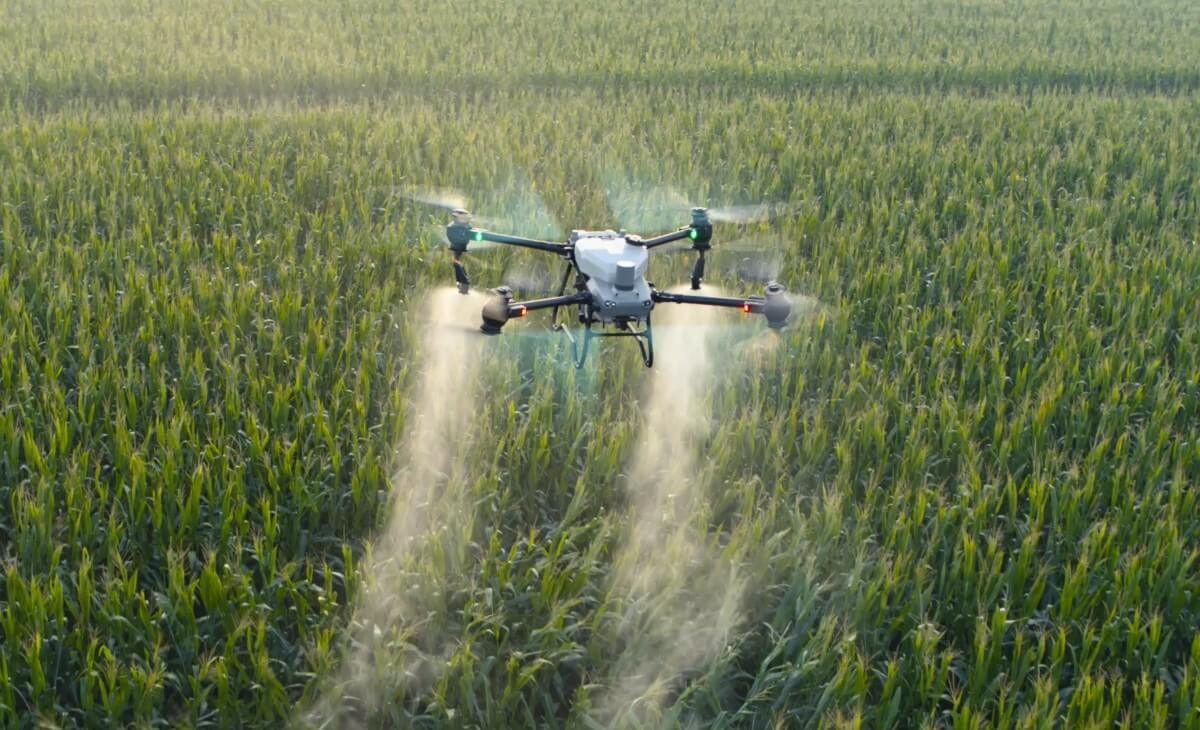
Drone fertilizer spreading is exactly what it sounds like: a heavy-lift agricultural drone carries a hopper of dry granular product — urea, blends, micronutrients, or cover-crop seed — and broadcasts it across the field from the air, following a flight plan and centimetre-grade GNSS.
It is worth being precise about what this article covers, because the word "application" gets used loosely. This is granular spreading of dry product. It is not liquid pesticide spraying — spraying is a separate topic, now moving under a narrow interim pathway following PMRA's June 2026 Letter of No Objection, and it is not blanket approval. Spreading dry granular product is legal and available today; everything below is about the spreading service.
Who It's For
Drone spreading does not win everywhere. On big, square, dry, uniform land a floater is hard to beat on raw dollars per acre. Where the drone earns its keep is the ground a floater struggles with: fields too wet to carry equipment, top-dress timing when the crop is too tall to drive through, odd-shaped or rolling fields with a lot of point rows, and variable land that benefits from a variable rate.
If your spreading problem is "the floater can't get on it, or can't get on it in time," this is for you. If it is "I have 3,000 flat dry acres to cover fast," a floater is probably still your tool — and a good operator will tell you that.
How It Works
Per-acre cost on a drone spread is driven by a handful of levers, and once you see them the price stops being a mystery:
- Rate (lb/ac). A drone hopper holds a fixed weight, so the higher the rate, the more loads per acre and the more flying time. A 40 lb/ac cover-crop seed rate covers far more ground per load than a 120 lb/ac urea top-dress.
- Field logistics. Distance from the staging/loading point to the field, water/road access, and how square the field is. Lots of short point rows and obstacles slow the effective rate.
- Flat-rate vs variable-rate. A flat broadcast is the simplest. A variable-rate (VRA) spread from a prescription map costs a little more to set up but can lower total product used by pulling rate off the zones that cannot use it.
- Travel and mobilization. Like any custom operator, a drone spread carries a mobilization component. It is amortized over the acres on the booking, so bigger or grouped bookings carry a lower per-acre share.
A worked example (real ranges, scoped per field). For reference, custom ground application in Alberta typically runs $10 to $15 per acre — that is the going custom rate the UAV AG ROI calculator uses as its baseline. The drone's own operating cost works out to about $4.50 per acre before aircraft amortization and mobilization. So a custom drone spread is priced in a band broadly comparable to a custom floater pass; the exact number on your field comes from the three levers above — rate (lb/ac), logistics, and flat-vs-variable.
Say a 100 lb/ac urea top-dress on a 160-acre quarter the floater can't reach because of June moisture: product is the grower's cost either way, and the application is quoted against those levers. The real comparison is not drone-vs-floater on a dry day — it is drone-now vs floater-three-weeks-late-or-never. A top-dress that lands on time is worth more than one that lands cheap.
For an exact number on your field, the variables above have to be filled in — that is what a quick scoping call does.
Key Dates
- Cover-crop / forage seeding:Late summer into standing crop, or post-harvest
- Fertilizer top-dress:In-season, when the crop is too tall to drive
- Wet-ground spreading:Any time the floater cannot carry the field
- Booking lead time:Book ahead of the window; rush slots when available
- OFCAF tie-in:Cover-crop seeding may be OFCAF-eligible
How UAV AG Can Help
For a drone spreading job, UAV AG delivers more than a drone showing up:
- →Calibrated spread pattern for the specific granular product and rate — pan-tested effective swath so the field comes up even, not striped.
- →Flat-rate or variable-rate from a prescription map, including an NDVI flight first when zone data does not already exist.
- →A georeferenced as-applied record of where product actually landed, for your records and any funding documentation.
- →Honest scoping: if a floater is the better tool for your field, we will say so before you book.
A Note From Us
The cheapest spread is not the one with the lowest per-acre fee — it is the one that lands on time, on the right zones, and even across the field. A drone is not trying to replace your floater on dry, square, uniform land. It earns its place on the acres and the timing windows the floater can't serve.
For the difference between granular spreading and liquid spraying — and where pesticide application by drone stands under the June 2026 interim pathway — see our glossary entry on granular vs liquid application. For variable-rate work, see VRA and prescription maps.
Frequently asked questions
Is fertilizer spreading by drone legal in Canada?
Yes. Spreading dry granular product — fertilizer, cover-crop and forage seed — is an established, legal drone service in Canada today. Applying pesticides by drone (liquid spray or granular bait) is a separate matter: as of June 2026, PMRA's interim Letter of No Objection opened a narrow pathway for products already registered for conventional aerial application, but it is not blanket approval. UAV AG offers granular spreading now and is "spray-ready" for products that qualify.
What does drone fertilizer spreading cost per acre in Alberta?
As a reference point, typical Alberta custom application rates run $10 to $15 per acre, and a drone’s operating cost is around $4.50 per acre before aircraft and mobilization — so a drone spread is priced in a band comparable to a custom floater pass. The actual fee depends on the rate (lb/ac), field logistics, flat-rate vs variable-rate, and mobilization across the booking, so UAV AG scopes the job against those variables — a short call with your field size, rate, and location produces an accurate per-acre price.
When does a drone beat a floater for spreading?
On wet ground a floater cannot carry, on in-season top-dress when the crop is too tall to drive through, on odd-shaped or rolling fields with many point rows, and on variable land where a variable rate saves product. On big, flat, dry, uniform acreage a floater is usually still the more economical tool, and we will tell you so.
Can a drone do variable-rate fertilizer?
Yes. With a prescription map loaded, the drone adjusts spread rate by management zone as it flies, using GNSS to know which zone it is over. If you do not already have zone data, an NDVI flight first can build the prescription. This is where drone spreading can place product more precisely than a flat-rate pass.
Does drone spreading qualify for OFCAF funding?
Cover-crop seeding — a common drone spreading job — is the practice OFCAF is built around, and drone purchases tied to cover-crop seeding became eligible for the 2026 cycle. A spreading job itself is a service rather than an equipment purchase, but if you are building toward your own cover-cropping program the OFCAF tie-in is worth scoping. See our OFCAF articles for the program detail.