September 23, 2026
What a Drone Granular Spreading Quote Should Actually Include
A dollars-per-acre figure on its own is not a quote. It is the last line of one. What makes two spreading quotes comparable is the rate they were scoped against, how the acres were counted, who handles the prescription, what documentation comes back, and whether the operator can show the authorization the work legally requires.
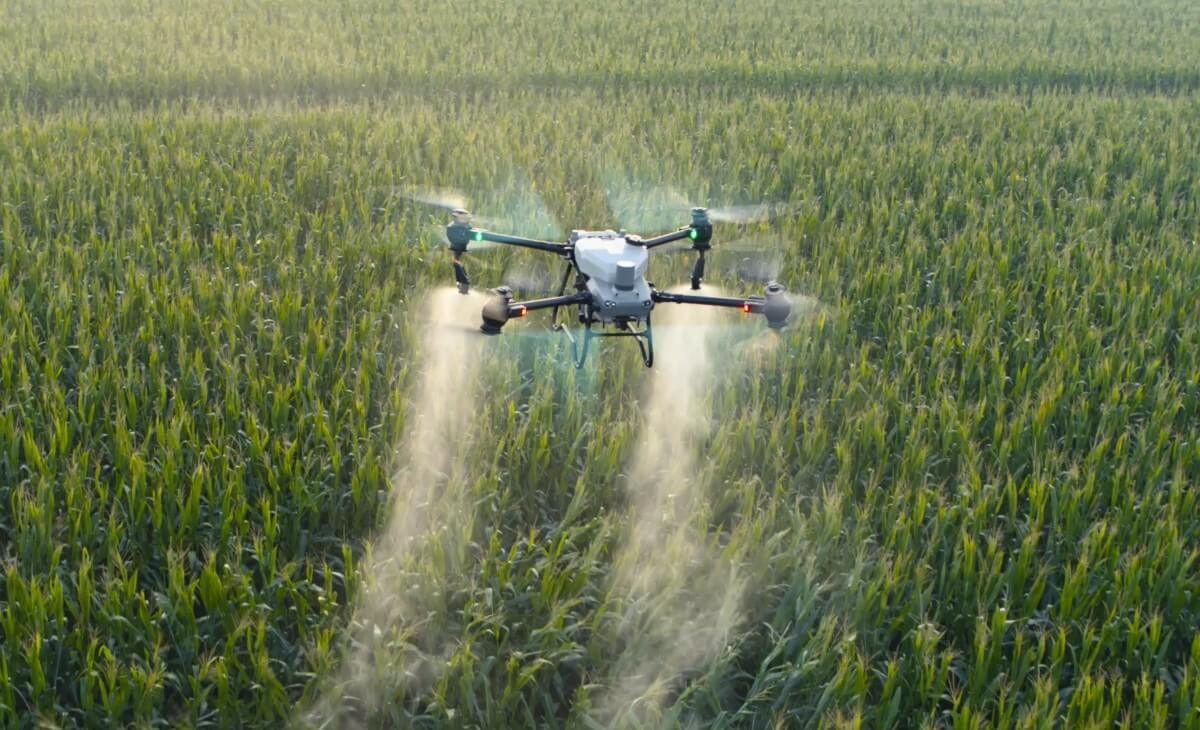
What It Is
A drone granular spreading quote is a scope document that happens to end in a number. The number is the part everybody reads first and the part that tells you the least.
Two operators can quote the same quarter at the same dollars per acre and be describing different jobs. One has priced a single flat rate flown to a field boundary. The other has priced a four-zone prescription at a heavier average rate, which means more product, more refills, and more flying time for the same acres. One includes the as-applied coverage record; the other treats it as an add-on. Neither operator is being dishonest. They are answering different questions, and only one of them is answering yours.
What follows is what a quote should state plainly so that comparing two of them means something. Granular fertilizer and cover-crop or forage seed spreading is the everyday legal drone service in Canada today, so that is the work this is written about.
Who It's For
Alberta grain and oilseed growers pricing a custom drone pass for the first time, and anyone holding two quotes that differ by a few dollars an acre with no way to tell why.
It is useful in the other direction too. If you are the one being asked for a number, the items below are the ones that turn into an argument at invoice time when they were left unstated at quote time.
If your question is what the number itself should be rather than what sits behind it, the cost per acre article covers the published Alberta range. This one assumes you already have the range and want to know what you are buying inside it.
How It Works
Start with the rate, because the rate is the job. Drone spreading is refill-bound. Usable hopper weight divided by target rate gives loads per acre, and loads per acre is what sets flying time, which is what sets cost. That relationship is the single most important thing a quote can be explicit about, and it is covered in more depth under payload-to-acre.
A quote written against 40 lb per acre of seed and a quote written against 150 lb per acre of dry fertilizer are not the same quote even if the per-acre figure matches. Ask what rate the number assumes and what happens to it if the rate changes after the soil tests come back. A good quote says so without being asked.
Then ask how the acres are counted. There is more than one honest answer here, and the trouble comes from not knowing which one is in use.
- Boundary acres: the GIS area inside the field boundary, including the wet holes and the yard site the pass will not treat.
- Treated acres: what the aircraft actually covered, taken off the coverage record.
- Billed minimums: many operators carry a minimum per field or per move, because a 22-acre parcel costs nearly what a 40-acre parcel costs once travel and setup are counted.
None of those is wrong. A quote that does not say which one it means is the problem, and on a broken parkland quarter with sloughs and bush margins the gap between boundary acres and treated acres is not small.
Mobilization, and what one of them covers. Getting the truck, the aircraft, the batteries, and the generator to your farm is a fixed cost that does not care how many acres follow it. The question a quote should answer is what counts as one mobilization.
Three parcels within a few miles flown on one day is usually one move. The same three parcels spread across two municipalities on two separate weeks is three. If your acres are scattered, that distinction is worth more to your final invoice than a dollar an acre is.
Who does what on the day. Most custom spreading quotes assume the farm supplies the product, has it open and reachable at a staging point, and provides the loader or auger and somebody to run it. That is a reasonable assumption and it is also an assumption, which means it belongs in writing. The application day preparation guide covers the full ground-side list.
If you want the operator to supply loading equipment, or to source and haul product, that is a different quote. Find out before the truck arrives rather than after.
Prescription handling is a separate question from flying. Flat-rate spreading and variable-rate spreading are different products with different setup costs. A quote should say which it covers and, if variable rate, who builds the map.
- Flying a prescription you or your agronomist supply, in a format the aircraft accepts.
- Building the zones from imagery, soil tests, and yield data as a mapping job, then flying it.
- A flat rate across the field, which is still the correct answer on genuinely uniform ground.
The middle option is real work and generally priced as its own line. See prescription map and VRA for what that build actually involves, and be wary of a variable-rate quote that shows no setup cost anywhere, because the work did not disappear, it just moved somewhere you cannot see it.
Calibration should be in the quote, not an assumption. A spreader's spec-sheet swath is not the swath your product throws. Prill size, density, rate, and flight height all move the deposition curve, which is why a pan test is what sets the effective swath actually flown. Skipping it is how a field ends up striped by a machine that was working perfectly.
Ask whether a pan test for your specific product is included, and whether it gets redone when the product or rate changes. It is a short job and a cheap one. It is also the difference between an even spread and a pattern you will be reading in the crop all season.
What comes back afterward. The pass is finished when the documentation is in your hands, not when the aircraft lands. A quote should say what you receive and in what form.
At minimum that is a georeferenced as-applied map showing where product actually landed, with the rate flown, the acres treated, the date, and the product recorded. That file is your own record of the job, it is what a funding or program claim wants to see, and it is what makes next year's comparison possible. If it is not named in the quote, it is not included in the quote.
Weather terms, because the window is the whole problem. Granular passes get booked precisely when ground equipment cannot travel, which is also when the weather is least cooperative. Wind matters more than most people expect, because the pan-tested pattern only holds in conditions resembling the ones it was tested in.
A quote should say who makes the go or no-go call, what happens to the date when the answer is no, and whether standby or a second move is chargeable. Agreeing that in advance costs nothing. Discovering it on a marginal morning costs the window.
Proof the operator is allowed to do the work. A dispensing operation in Canada requires a Transport Canada SFOC that names the aircraft and the pilots, along with current RPAS pilot certification and liability insurance. Asking to see all three is normal, and any operator who works for farms regularly will have them ready.
This matters more than it sounds. A cheaper quote from an operator without authorization is not a cheaper version of the same service. It is a different thing wearing the same name.
Where pesticides sit. Keep this separate in your head, because it is the part of the regulatory picture that moved recently. In June 2026 Health Canada's PMRA issued an interim Letter of No Objection opening a narrow, label-bound pathway for applying by drone those pesticides already registered for conventional aerial application, under those label directions, where the registrant has not opted out. Transport Canada authorization and provincial applicator licensing still apply, and products without aerial label directions are not covered. Granular fertilizer and seed remain the straightforward everyday work, and a spray quote carries licensing questions a granular quote does not.
The comparison checklist
| What to ask | Why it changes the number |
|---|---|
| What application rate is this priced at? | Rate sets loads per acre, which sets flying time and cost |
| Boundary acres or treated acres? | On broken parkland quarters the two can differ meaningfully |
| Is there a field or move minimum? | Small or scattered parcels are priced by the move, not the acre |
| What counts as one mobilization? | Scattered acres can become several moves instead of one |
| Who supplies product, loader, and an operator? | Usually the farm, but only if the quote says so |
| Flat rate or variable rate, and who builds the map? | Zone building is real work and belongs as its own line |
| Is a pan test for my product included? | Uncalibrated swath is the most common cause of striping |
| What documentation comes back, and when? | The as-applied record is the deliverable, not a courtesy |
| Who calls the weather, and what does a cancelled day cost? | Standby and second moves are where invoices surprise people |
| Can I see the SFOC, pilot certification, and insurance? | Without them it is not the same service at a lower price |
On the number itself. For context rather than for quoting your field: custom application in Alberta commonly runs in the range of 10 to 15 dollars per acre, and the site's own ROI calculator uses roughly 4.50 dollars per acre as a drone operating cost. Those are reference points, not a price for your quarter. A number that sits outside the range is not automatically wrong, and a number inside it is not automatically comparable to another one inside it. That is the whole point of everything above.
Key Dates
- Application rate:Named in the quote, with a rule for what happens if it changes
- Acre basis:Boundary acres or treated acres, stated explicitly
- Mobilization:What counts as one move across scattered parcels
- Calibration:Pan test for your product, redone when product or rate changes
- Deliverable:Georeferenced as-applied record, named in the quote
- Authorization:SFOC naming aircraft and pilots, plus certification and insurance
How UAV AG Can Help
What a UAV AG spreading quote states in writing before you agree to it:
- →The application rate the price was built on, and what changes if your soil tests move that rate.
- →How the acres were counted, and any field or move minimum, so the invoice matches the estimate.
- →What one mobilization covers when your acres sit on more than one parcel.
- →Whether the pass is flat rate or flown from a prescription, and whether zone building is included or quoted separately.
- →A pan test for your specific product and rate, so the effective swath is measured rather than assumed.
- →A georeferenced as-applied coverage record returned after the pass, for your files and for program documentation.
- →Who makes the weather call, and what a cancelled or rescheduled day costs.
- →Current SFOC, RPAS pilot certification, and liability insurance, available to view on request.
A Note From Us
The reason a quote gets written this way is not paperwork for its own sake. It is that almost every disagreement about a custom application invoice traces back to something both parties assumed and neither wrote down: the rate, the acre count, whose loader, whether the weather day was chargeable.
None of that is expensive to settle in advance. It takes one conversation with your acres, your product, your target rate, and your field locations, and it makes the resulting number something you can actually hold beside somebody else's number.
If you are collecting quotes right now, take the checklist above to all of them, including ours. A quote that answers every line is not necessarily the cheapest one you will receive. It is the one you can evaluate.
Frequently asked questions
What should be included in a drone fertilizer spreading quote?
At minimum: the application rate the price assumes, how acres are counted and any minimum, what one mobilization covers, whether the pass is flat rate or flown from a prescription and who builds that map, whether a pan test for your product is included, what documentation comes back and when, the weather and rescheduling terms, and proof of SFOC, pilot certification, and insurance. A quote that leaves those unstated is a price rather than a scope.
Why do two drone spreading quotes differ if the per-acre price is the same?
Because the per-acre price is the output of several assumptions that are rarely identical. One quote may assume a light flat rate flown to a field boundary while the other assumes a heavier variable rate with more refills and more flying time. Add differences in acre counting, mobilization, prescription setup, and whether the as-applied record is included, and two matching numbers can describe noticeably different jobs.
Does the application rate change what I pay per acre?
Usually yes, because drone spreading is refill-bound. Usable hopper weight divided by the target rate gives loads per acre, and more loads means more time in the air and on the ground reloading. A pass at a light seeding rate and a pass at a heavy dry fertilizer rate cover the same acres with very different amounts of flying, which is why a quote should name the rate it was built on.
Am I billed for boundary acres or the acres actually treated?
Both are used in the industry, so the answer depends on the operator and it should be written down. Boundary acres come from the GIS field shape and include areas the pass will not treat, such as wet holes, bush margins, and a yard site. Treated acres come off the coverage record. On broken parkland quarters the gap between the two is not trivial, and a per-field or per-move minimum may apply on small parcels either way.
Is the as-applied map included or extra?
That varies, which is exactly why it belongs in the quote by name. A georeferenced as-applied record showing where product landed, at what rate, on what date, and with which product is the documentation half of the job. It is what a program or funding claim wants to see and what makes a comparison against next year possible. If the quote does not mention it, assume it is not included and ask.
What paperwork should I ask a custom drone operator for?
A current Transport Canada SFOC that names the aircraft and the pilots who will fly your field, RPAS pilot certification for those pilots, and a certificate of liability insurance. A dispensing operation in Canada requires the authorization, so asking is routine rather than adversarial. If pesticide application is under discussion, provincial applicator licensing applies as well and sits under a separate, narrower interim regulatory pathway than granular work.
What is normally not included in a spreading quote?
Typically the product itself, hauling it to the field, the loader or auger and somebody to run it, soil sampling, and agronomic sign-off on rates. Most custom quotes assume the farm supplies those and that product is on site and reachable before the crew arrives. Those are fair assumptions and they are still assumptions, so the quote should say so plainly rather than leaving each side to guess.