July 8, 2026
Spring vs Fall Granular Fertilizer Timing on Alberta Grain — and Where a Drone Fits
Fall and spring each have a real case for granular phosphorus, potassium, sulphur, and nitrogen. Here is how the two windows compare on Alberta grain, and the spots where a spreader-equipped drone earns its place in either one.
What It Is
Scope and legality up front: this page is about granular fertilizer spreading — dry, non-pesticide product — which is the everyday, legal drone service in Canada today, subject to the usual Transport Canada aviation rules. Drone pesticide (liquid) spraying is a separate matter: it is not a general service yet, sitting under a narrow interim PMRA pathway after the June 2026 Letter of No Objection. Everything below is about granular spreading only.
"When should the granular go on?" is one of the oldest questions on an Alberta grain farm, and the honest answer is that both fall and spring have a real case depending on the product, the field, and the weather you get.
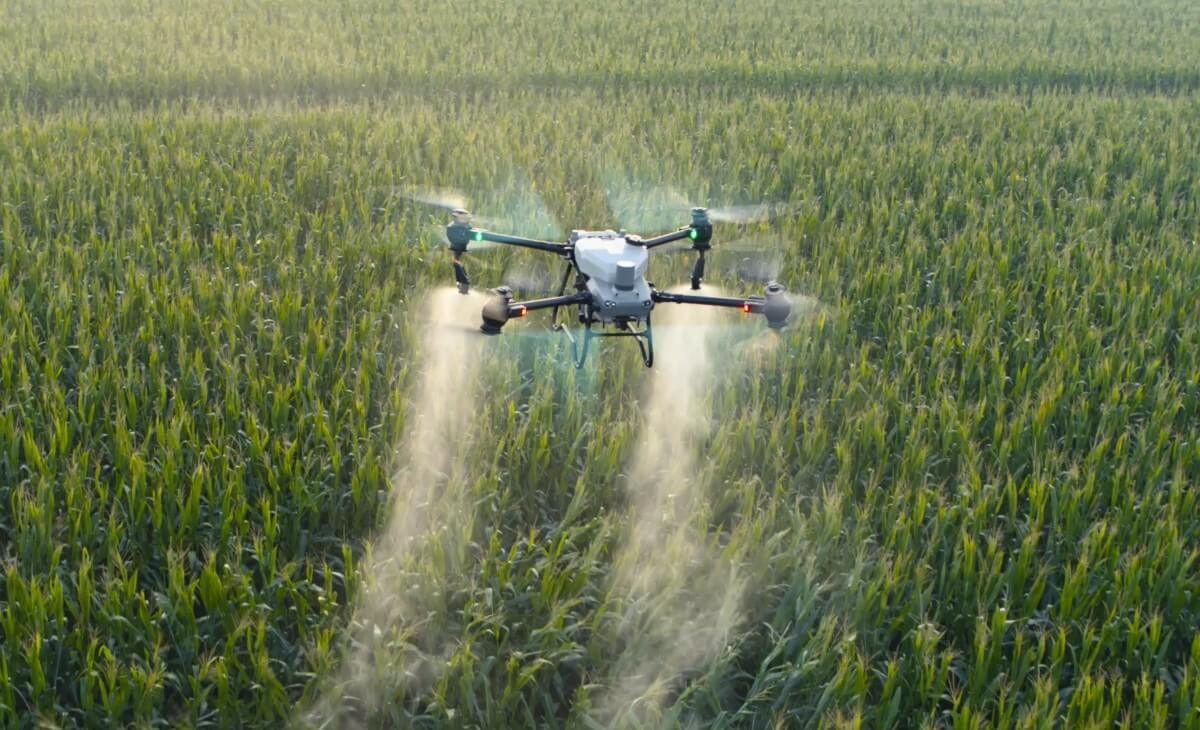
Granular fertilizer means dry phosphorus, potassium, sulphur, and nitrogen sources, plus lime and other soil amendments. Because spreading it is a legal, established drone service, a spreader-equipped drone is a genuine option in either window, not a workaround.
The timing decision comes down to a trade-off between three things: nutrient loss risk between application and uptake, your own workload and equipment availability at each time of year, and how reliably you can actually get across the ground when you want to. Fall spreads the workload and can beat a wet spring; spring keeps the product closer to the crop that uses it. Neither is universally right.
Who It's For
Alberta grain growers deciding when to place granular P, K, S, and N on cereals, canola, and pulses — especially operations that have been squeezed by short, wet spring windows or by a fall that closed early.
If you have ever watched a floater sit at the approach because the ground would not carry it, or pushed a top-up pass late because seeding logistics owned the sprayer and spreader, this is the decision this page is about. It is also for growers weighing whether a drone pass can rescue timing in the window a ground rig keeps missing.
How It Works
Think about each window in terms of what it does well and what it costs you.
The fall window (post-harvest to freeze-up). Fall is mostly a workload and logistics play. The tank and the calendar are freer than they are at seeding, immobile nutrients like phosphorus and potassium sit safely in the soil over winter, and getting product on in fall takes pressure off a busy spring. The catch is nitrogen: fall-applied N sits in the soil for months before the crop can use it, and depending on soil type, moisture, and an early thaw, some of it can be lost to leaching or denitrification before spring — which is why fall N is usually paired with cooler soils and, where warranted, a stabilizer.
The spring window (pre-seed, at-seeding, and in-crop). Spring keeps the fertilizer closer in time to the crop that takes it up, so the loss window on nitrogen is shorter and placement lines up with early demand. The cost is that spring is the tightest, most contested window on the farm — seeding equipment, the sprayer, and the weather are all competing for the same few field-days, and a wet spring can close the ground entirely just when you need to be on it.
Where a drone fits each window. A drone does not replace a floater on big, dry, square acres — a ground rig covers those faster and cheaper. What the drone adds is access and timing on the ground a floater cannot serve:
| Window | Typical granular job | Where a drone earns its place |
|---|---|---|
| Fall | Broadcast P, K, and soil amendments post-harvest | Wet or soft fields the floater would rut before freeze-up; odd-shaped or sloped parcels |
| Spring pre-seed | Broadcast blends ahead of the drill | Fields still too soft to carry a ground rig in a late, wet spring |
| In-crop top-dress | Sulphur or nitrogen top-up as the crop grows | Standing crop grown too tall to drive through, or wet ground during the uptake window |
In all three, the drone runs the same prescription map a floater would, so a variable-rate pass by management zone is available in either season. For the deeper timing case on that in-crop top-dress, see the companion piece on top-dressing a crop the floater can't reach.
A few agronomy guardrails to talk through with your agronomist. These are general principles, not a recommendation for your specific field:
- Fall-applied phosphorus, potassium, and sulphate sulphur are relatively immobile and generally hold their place over winter, so they suit a fall pass.
- Fall nitrogen is the exception — it is best reserved for cooler soils and is commonly banded and/or paired with a stabilizer to limit over-winter loss; sandy or wet, poorly drained soils raise that loss risk.
- Surface-broadcast urea is prone to ammonia volatilization until it is moved into the soil, and the risk climbs on warm, high-pH or calcareous soils. A rainfall of roughly 6 to 12 mm within a day or two of application moves it in and limits the loss; where a timely rain is not reliable, a urease inhibitor such as NBPT is the common protection. Confirm the specifics with your agronomist for your soil.
Application quality is part of the timing decision. Getting the product on in the right window only pays if it lands evenly. That means the spreader is calibrated for the specific product — urea, ESN, AMS, and potash all flow and throw differently — and that the effective swath is set from a pan test rather than a spec-sheet width, so overlap is even and you avoid striping. Edge control near shelterbelts, water, and field margins matters too. See effective swath for why the usable width is narrower than the raw spread.
What a drone will and won't do here. A drone is a placement-and-access tool, not a high-throughput bulk spreader. Payload per load is limited, so a heavy blanket rate on big dry acres is still a floater's job; the drone's edge is a variable-rate or targeted pass on ground the floater can't work in time. Granule size and product flowability matter, and wind affects the spread pattern the same way it affects any broadcast. Scope the product and rate before assuming a drone is the right carrier.
A worked cost example (illustrative, using only our published reference figures):
- Assumption: a variable-rate top-up on the wet treeline strips and slough margins of a quarter, the ground a floater is leaving until it firms up.
- Drone operating cost: about $4.50 per acre before aircraft and mobilization.
- Reference band: typical Alberta custom application runs $10 to $15 per acre, so the drone's per-acre band sits in the same range as a custom floater pass — mobilization and the specific rate are added on top and scoped per job.
- Takeaway: the reason to send the drone on that ground is access and timing inside the window, not a lower fee. Your real number depends on the rate, the field, and the logistics, which is why we scope it rather than quote a flat figure.
For the mechanics of how the rate and field logistics drive the per-acre number, see drone fertilizer spreading cost per acre, and for the variable-rate side see VRA and prescription map. To scope a pass, see our fertilizer spreading service and field mapping pages.
Key Dates
- Fall broadcast window:Post-harvest (Sept) to freeze-up
- Spring pre-seed / at-seeding:Roughly April to May
- In-crop top-dress:Late May through June, as uptake demand rises
- Related: spreading cost per acre:uavag.com
How UAV AG Can Help
We help you make the timing call and then cover the field days a ground rig keeps missing:
- →Talk through which products in your plan are better suited to fall vs spring for your soils, and where a stabilizer or split changes the answer — with your agronomist in the loop.
- →Put a granular pass on wet, tall-crop, or odd-shaped ground your floater cannot reach in the window that matters, so timing does not slip.
- →Run a variable-rate pass from your prescription map so each management zone gets its own rate in either season.
- →Deliver an as-applied record of where product actually landed, for your own agronomy and for 4R and funding documentation.
A Note From Us
There is no single right answer to fall vs spring — it depends on the product, your soils, and the weather you actually get. On big, dry, square acres a ground floater is faster and cheaper, and we will say so. Where a drone earns its keep is the field a floater cannot serve in time: wet ground, a crop grown too tall to drive through, or an odd-shaped parcel where hitting the window matters more than the raw per-acre fee.
A note on scope: this is granular spreading — fertilizer and seed — which is the established legal drone service in Canada today. Pesticide application by drone is a separate matter now moving under a narrow interim pathway after PMRA's June 2026 Letter of No Objection, not blanket approval; for that line see granular vs liquid application.
If you want a second set of eyes on the timing call and someone to cover the field days your ground rig keeps missing, let's talk.
Frequently asked questions
Is fall or spring better for granular fertilizer in Alberta?
Neither is universally better. Fall spreads out your workload, lets immobile phosphorus and potassium sit safely over winter, and can beat a wet spring — but fall-applied nitrogen sits for months and can lose some availability to leaching or denitrification depending on soil and weather. Spring keeps the product closer in time to crop uptake and shortens the nitrogen loss window, but it competes with seeding for the tightest field-days on the farm. The right call depends on the product, your soils, and the weather you get.
Can phosphorus and potassium go on in the fall?
Yes. Phosphorus and potassium are relatively immobile in soil, so they can be applied in fall and stay in place through winter for the next crop. That is part of why fall broadcast of P and K is a common way to take pressure off a busy spring.
Why is fall nitrogen riskier than fall phosphorus?
Nitrogen is mobile in soil and subject to leaching and denitrification, so fall-applied N sits exposed for months before the crop can use it and some can be lost, especially with warm soils, wet conditions, or an early thaw. Phosphorus and potassium do not move the same way, so their fall loss risk is much lower. Where fall N is used, it is usually paired with cooler soils and, where warranted, a stabilizer.
Where does a drone fit in the fertilizer timing decision?
A drone is not there to replace a floater on big, dry, square acres — a ground rig covers those faster and cheaper. It fits the fields a floater cannot serve in the window you need: soft or wet ground before freeze-up in fall, fields still too soft to carry a ground rig in a wet spring, and standing crop grown too tall to drive through for an in-crop top-dress.
What does drone granular spreading cost per acre?
As a reference, typical Alberta custom application runs about $10 to $15 per acre, and a drone's operating cost is roughly $4.50 per acre before aircraft and mobilization, so the per-acre band is broadly comparable to a custom floater pass. The drone's value is access and timing on ground a floater cannot serve, not a lower fee on easy fields. See our full breakdown of what drives the number.
Is spreading granular fertilizer by drone legal in Alberta?
Yes. Spreading dry, non-pesticide granular product — fertilizer and cover-crop or forage seed — is an established, legal drone service in Canada today, subject to the usual Transport Canada aviation rules. Pesticide application by drone is a separate matter now under a narrow interim pathway following PMRA's June 2026 Letter of No Objection, not blanket approval.
Will a drone replace my floater or air cart?
No — think of it as a complement, not a replacement. A ground rig covers big, dry, uniform acres faster and cheaper and remains the right tool for bulk application. The drone is for the passes a ground rig cannot make in time: soft or wet ground, standing crop grown too tall to drive through, and odd-shaped or sloped parcels where a targeted or variable-rate top-up matters more than raw throughput.
What granular products and rates can a drone spread?
Dry, free-flowing granular fertilizers — phosphorus, potassium, sulphate, and nitrogen blends — plus cover-crop and forage seed. Granule size, density, and flowability all affect how evenly a product spreads, and payload per load is limited, so heavy blanket rates on big acres are still better suited to a floater. We scope the specific product and rate before confirming the drone is the right carrier.
Can you run a variable-rate prescription for spreading?
Yes. A spreader-equipped drone loads your prescription map and changes rate by management zone as it flies, the same way a variable-rate floater would, and logs an as-applied record of where product actually landed. If you already build prescriptions with your agronomy provider, we work from those; if not, mapping the field is the first step. See our variable-rate application and prescription map explainers for how the zones are built.
Can a drone spread ESN, AMS, or potash as well as urea?
Yes — dry, free-flowing granular products all spread, but they flow and throw differently, so the spreader is calibrated to the specific product and its density before the pass. Urea, ESN, ammonium sulphate (AMS), and potash each need their own settings, and the effective swath is confirmed with a pan test so overlap stays even. The right product and rate for your field is an agronomy decision to make with your advisor.
What rainfall does surface-broadcast urea need after application?
To limit ammonia volatilization loss, surface-applied urea generally benefits from roughly 6 to 12 mm of rain (or irrigation) within a day or two to move it into the soil, with higher risk on warm, high-pH or calcareous soils. Where a timely rain is not reliable, a urease inhibitor such as NBPT is the common protection. Confirm the specifics for your soil and product with your agronomist.